Loading…
ChapterBrief · Manhwa
Manhwa Like Tower of God: 9 Series That Match Its Scale
Manhwa like Tower of God: 9 picks sorted by what drew you in. Faction politics, ensemble mystery, tower structure, and world-scale ambition.
9 min readBy Sophie Laurent
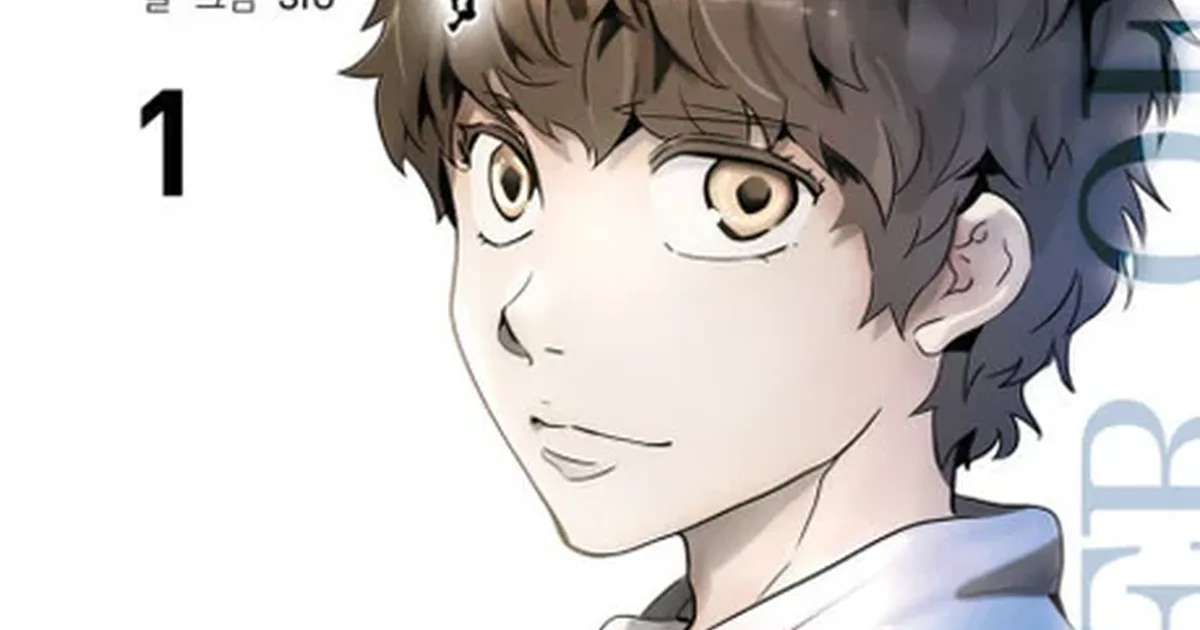
"Manhwa like Tower of God" is a specific search. It's not the same as "manhwa like Solo Leveling," and treating the two as interchangeable produces bad recommendations for both.
Readers coming from a Western comics background may also find our Best Superhero Manhwa: 6 Series for Marvel and DC Fans helpful as an entry point.
Tower of God is not about one protagonist scaling to dominance. Bam is rarely the strongest person in the room. The series' engine is faction politics: the Jahad Empire, FUG, Wolhaiksong, and dozens of smaller organizations with overlapping and contradictory interests. The mystery driving the narrative isn't "can the protagonist get stronger" but "what is actually at the top of the tower, and who profits from the answer." The cast is an ensemble with morally grey members rather than a supporting crew that exists to admire the protagonist.
That's what makes "manhwa like Tower of God" a harder list to build than "manhwa like Solo Leveling." The genre has many series that do the power-accumulation structure well. Fewer do the political complexity.
The recommendations below are sorted by which aspect of Tower of God you're actually chasing.
TL;DR: Manhwa like Tower of God: 9 picks sorted by what drew you in. Faction politics, ensemble mystery, tower structure, or world-scale ambition.
Overview
Tower of God (Korean title: Sin-ui Tap) is a Korean manhwa written and illustrated by SIU (Slave In Utero). It has been serializing on WEBTOON since 2010, making it one of the platform's longest-running originals, with over 652 chapters across three seasons as of mid-2026. Season 3 concluded and the series entered hiatus, with no confirmed return date announced. The story follows Twenty-Fifth Bam, a boy who has spent his entire life in the darkness below the Tower's lowest floor, knowing only one person: Rachel. When she enters the Tower without him, he follows, becoming an Irregular (a participant who entered without official invitation) in a structure designed to select one survivor capable of reaching the top.
Tower of God is an ensemble political epic. Bam is rarely the strongest person in any room, and the series is not interested in his becoming so. What drives the narrative is the Tower's institutional structure: the hereditary Jahad royal family controls the upper floors, the criminal organization FUG operates against them, and the neutral irregular faction Wolhaiksong holds a third position. Each floor test is a design problem that forces party formation and trust allocation, and the political consequences of those tests accumulate across seasons. The mystery at the center is not who will win but what the top of the Tower actually means and who has structured the entire climbing system to benefit from people trying to reach it. The WEBTOON version is free in English and is the primary reading platform; all 652+ episodes are archived.
Manhwa like Tower of God: key takeaways
- Manhwa like Tower of God: the search is for faction politics, ensemble mystery, and world-scale ambition, not a protagonist-gets-stronger loop
- Closest overall match: Omniscient Reader's Viewpoint (hidden knowledge advantage, ensemble cast, political complexity)
- Closest tower structure: Second Life Ranker (literal tower system, faction conflicts, revenge motivation)
- Best for completed series: Noblesse (543 episodes) and The God of High School (569 chapters)
- All WEBTOON-hosted picks in this list are free to read
- Full ToG arc breakdown and platform navigation: Tower of God Reading Guide →
If the faction politics were the draw
This is the rarest element to find elsewhere. Tower of God's faction system (the hereditary Jahad family, the criminal FUG organization, the neutral irregular Wolhaiksong) creates a political structure where the protagonist's choices have institutional consequences. Winning a fight changes alliances. Alliances determine what resources you can access. Most action manhwa skips this entirely and goes straight to escalating fights.
Omniscient Reader's Viewpoint (WEBTOON, ongoing, 300+ chapters) is the best match in this category and the best recommendation on this list. Kim Dokja has read an apocalyptic web novel for thirteen years and is the only person alive when that novel's events begin to come true. His advantage is narrative foreknowledge: he knows what the "scenarios" are and who the key players will be. What the series does with that premise is build exactly the political complexity Tower of God fans want: hidden agendas, organizational factions fighting over how to interpret the rules, and a protagonist who survives not by getting stronger but by knowing more. The cast is an ensemble with genuine character complexity. The scale expands to match Tower of God's ambition by the mid-run. ORV review here if you want the full assessment.
 Omniscient Reader's Viewpoint cover art.
A Returner's Magic Should Be Special (Tappytoon/Kakao, 268 chapters, manhwa completed June 2024): Desir Herrmann survives a catastrophic future, resets to the past, and uses that foreknowledge to prevent it by building a team of capable people he knows become critical. The regression mechanic here is less about power accumulation and more about institutional change. Desir's problem isn't getting stronger, it's getting a broken system to recognize talent it's designed to suppress. Closer to ToG's institutional critique than most power-fantasy isekai.
 A Returner's Magic Should Be Special cover art.
For a full critical breakdown of ORV and how it compares to the series it's been grouped with:
Omniscient Reader's Viewpoint Review →
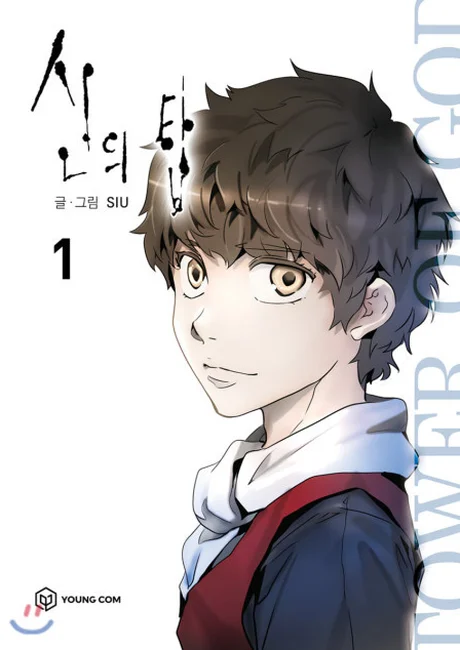 Tower of God by SIU, the 20+ year manhwa whose faction politics, layered world, and ensemble cast define the genre.
If the tower structure was the draw
The literal test-based vertical structure is more replicable than the faction politics, and several series use it.
Second Life Ranker (Naver, ongoing; Season 4 returned April 23, 2026): Yeon-woo inherits his twin brother's encrypted diary from inside "The Obelisk," a dimensional tower where players compete across floors. His brother was betrayed and killed at the top by members of his own team. Yeon-woo enters the tower with full knowledge of its mechanics, traps, and the exact people responsible for his brother's death. The structural parallel to Tower of God is clear: tower floors, competing factions within the tower, a protagonist who knows more than he's supposed to. Where it differs from Tower of God is motivation. Yeon-woo's goal is revenge rather than discovery, which makes it a more focused and less politically ambiguous series. That's a feature if the faction complexity of ToG was sometimes frustrating, and a loss if it was the main draw.
 Second Life Ranker cover art.
Hardcore Leveling Warrior (WEBTOON, ongoing, 300+ chapters across three seasons): a gaming world where a comet's impact means the game and reality have fused. The protagonist was once the most powerful player in the game and has been reset to level 1. He rebuilds using knowledge of what the game's rules allow. The faction mechanics (guilds with conflicting interests, alliances that trade on information asymmetry) replicate some of ToG's political texture within a game-system frame. Not as morally complex as Tower of God's best arcs but considerably more so than most system-fantasy manhwa. See the Hardcore Leveling Warrior Reading Guide for the full arc and season breakdown.
 Hardcore Leveling Warrior cover art.
If the ensemble cast and hidden-world scale were the draw
Eleceed (WEBTOON, ongoing): Jiwoo is a human with cat-like reflexes; Kayden is an elite Awakened (esper) who's been turned into a cat. The series unfolds the hidden society of Awakened individuals (clans, rankings, institutional politics between power blocs) gradually, over a long run that becomes more politically complex as the scope expands. The early chapters read as a lighter series than Tower of God. The later chapters are doing something more ambitious. Start anywhere in the first fifty chapters and let it show its hand. Slow build, high ceiling.
 Eleceed cover art.
UnOrdinary (WEBTOON, 379+ episodes, ongoing): An elite private school where social hierarchy is determined entirely by supernatural power level. John, the protagonist, hides his real ability and is systematically exploited by the hierarchy before the series reveals what he actually is and what the implications are. The hidden-power premise is common; what UnOrdinary does that's less common is sustain the institutional critique. The school's system is explicitly built to keep the powerful powerful and the weak accessible. The political texture is less complex than Tower of God's multi-faction structure, but the morally grey cast and the examination of how systems perpetuate themselves is genuine.
For a ranked list of action manhwa covering ensemble series with escalating political complexity:
Best Action Manhwa 2026 →
If you want it completed
The honest problem with manhwa like Tower of God is that the long-running series with genuine political complexity are mostly ongoing. The completed options are good but scaled down.
Noblesse (WEBTOON, 543 episodes, completed December 2019): Cadis Etrama Di Raizel (Rai) is an ancient vampire-adjacent being who wakes after an 820-year sleep and finds himself in a Korean high school. Frankenstein, his loyal servant, has built a life there in his absence. Supernatural factions (the Union and its various divisions) pursue Rai for reasons connected to his power and his past. The ensemble dynamic (Rai, Frankenstein, the school friends who become gradually aware of the supernatural world) is the strongest element. Completed, free on WEBTOON, and one of the longest-running series to reach an actual ending.
The God of High School (WEBTOON, 569 chapters, completed 2024): if what you want is the ensemble-tournament structure from Tower of God's early selection arcs, without the political complexity, GoHS is the recommendation. The series is about a high school martial arts tournament that expands into mythology-scale conflict. The cast is an ensemble with well-developed competing motivations. The narrative arc is less politically layered than Tower of God but the scope escalation (from school tournament to national stakes to divine conflicts) follows a similar pattern of revealing that every competition was actually about something larger. GoHS reading guide covers the full arc breakdown.
Omniscient Reader's Viewpoint, the most commonly recommended Tower of God alternative for readers who loved the world-scale.
The honest answer to "manhwa like Tower of God"
No single series does everything Tower of God does. The faction politics at ToG's scale (three or four major organizations with genuine internal complexity, dozens of irregular players with their own agendas, and a protagonist navigating between them without being able to simply overpower the problem): that specific combination doesn't have a direct equivalent.
Omniscient Reader's Viewpoint is the closest, and it's genuinely close. Second Life Ranker has the structural parallel with less political depth. Eleceed is building toward something comparable but hasn't finished showing its hand. The completed options (Noblesse, The God of High School) are worth reading but represent an earlier, less politically complex version of what Tower of God is doing.
The more useful question: which element of ToG matters most to you? That produces a more accurate recommendation than "most similar."
Frequently Asked Questions
What is the closest manhwa to Tower of God?
Omniscient Reader's Viewpoint. Both have hidden-knowledge protagonists, ensemble casts with complex loyalties, and world-systems with institutional politics. ORV doesn't fully replicate ToG's scale but operates at comparable ambition.
Is there a manhwa with the same tower structure?
Second Life Ranker is the most direct parallel: literal tower, faction politics within it, protagonist with strategic foreknowledge via his brother's notes.
What manhwa like Tower of God are free?
ORV, UnOrdinary, Eleceed, Hardcore Leveling Warrior, Weak Hero, The God of High School, and Noblesse are all free on WEBTOON.
Is there a completed option?
Noblesse (543 episodes, completed 2019) and The God of High School (569 chapters, completed 2024), both free on WEBTOON.
How is Tower of God different from Solo Leveling?
Solo Leveling follows one protagonist scaling against increasingly powerful enemies. Tower of God is an ensemble political epic. The difference is structural, not cosmetic: the protagonists' strategies, what the series considers a victory, and what the supporting cast exists to do are all different. Searching for "manhwa like Solo Leveling" produces different results than this list.
Where do I start with Tower of God?
The Tower of God reading guide covers platform navigation and the Season 2 Episode 0 entry issue. The short version: the platform UI is confusing, so don't start at S2 Episode 1 when you finish S1.
Related Reading
References
About the author

Critical Theorist & Features Writer
Manhwa and webcomic critic with a background in literary analysis. Writing about narrative and genre since 2016. Specialises in genre history and story structure.
- Manhwa and webcomic critic since 2016
- Graduate background in comparative literature
- Published criticism covering Korean and Japanese comics
- Specializes in genre lineage and narrative structure


Disclaimer
This article is published for informational and entertainment purposes. It does not constitute professional financial, legal, or technical advice. Series availability, platform access, translation status, and chapter counts change. Verify critical details (pricing, regional availability, official translation status) with publishers and platforms. Affiliate links, where present, help support our editorial work and are labelled in our affiliate disclosure.