Rating: 8.5/10. This The God of High School review is the verdict on whether it's worth reading. For the arc order and where to start, see the God of High School reading guide.
TL;DR: The God of High School review: 8.5/10. Completed at 569 chapters with a full ending, free on WEBTOON. The tournament arc (roughly chapters 1-112, the stretch the MAPPA anime adapts) is the strongest run; the mythology arc afterward is denser and more divisive but pays off if you're invested in the trio.
The God of High School review is easier than most. The series is 569 chapters, completed, with an ending that addresses what it set up. That's a rare position for a manhwa that started in 2011 when the format was still figuring out what it could do.
The more interesting question in any The God of High School review isn't whether it's good (it is), but which version of the series you're reviewing. The tournament arc is one thing. The mythology arc is a different thing. They share characters and a world, and the second grows out of the first in ways that feel inevitable in retrospect. But readers approach them differently, finish them differently, and evaluate them differently. This review covers both, because separating them would be less useful than explaining how they fit together.
Key Takeaways
- The God of High School review: 8.5/10. 569 chapters with a real ending is still uncommon enough to be notable.
- The MAPPA anime (13 episodes, 2020, Crunchyroll) covers roughly the first 112 chapters and is a functional entry point
- Tournament arc runs chapters 1-112; mythology arc runs the rest; both halves require each other to make full sense
- Jin Mori's motivation (he fights because he wants to) sounds like a tournament premise and becomes the series' actual argument
- Free on WEBTOON, complete run, official English translation
Overview
The God of High School is a completed Korean manhwa (569 chapters, 2011-2022) written and illustrated by Park Yongje, serialized on Naver Webtoon and available in English on WEBTOON at no cost with a full official translation. The series is one of the oldest and longest-running WEBTOON originals, completed with a full ending, making it one of the few major manhwa of its era that delivered a conclusion rather than stopping mid-arc or going on indefinite hiatus.
The premise: Jin Mori, Han Daewi, and Yoo Mira each enter a national high school martial arts tournament with entirely different motivations. Jin Mori fights because he wants to fight someone as good as him. Han Daewi needs the prize money for a sick friend's medical treatment. Yoo Mira is the last practitioner of a sword lineage, competing to attract a master. The tournament structure of the first arc (roughly chapters 1-112) is the series' most accessible entry point: physically specific fight choreography, clear stakes, and a trio whose different motivations make them an unusual ensemble. The mythology arc that follows (chapters 112-569) expands the scope to divine entities and cosmic conflict, drawing from Korean, Chinese, and Buddhist mythological traditions. MAPPA produced a 13-episode anime adaptation in 2020 covering the tournament arc, available on Crunchyroll.
The God of High School review: Jin Mori and the tournament premise
Advertisement
Jin Mori enters a national high school martial arts tournament for the simplest possible reason: he wants to fight someone as good as him. Not for money. Not to honor an obligation. Not to protect someone. He wants the contest itself, in the purest form possible.
That sounds like a genre premise and keeps turning out to be a character. The series uses Jin Mori's motivation as a consistent pressure test, putting him in situations where wanting to fight purely for the fight's sake is either exactly right or creates problems, and tracking how a person with that specific orientation navigates a world that keeps attaching other stakes to fighting.
Han Daewi enters for the prize money: his closest friend is terminally ill and the prize grant is the practical solution. Yoo Mira enters to preserve her sword lineage by finding a master who can continue it. Three people in the same tournament for reasons that have almost nothing to do with each other.
The trio that forms from these mismatched motivations is the emotional load-bearing structure of the entire 569 chapters. By the mythology arc, the external conflict has scaled to divine entities and cosmic stakes, and the thing that makes any of it matter is the relationships established in the tournament. Park Yongje knew what he was doing when he spent the early chapters building the trio before the larger story became visible.
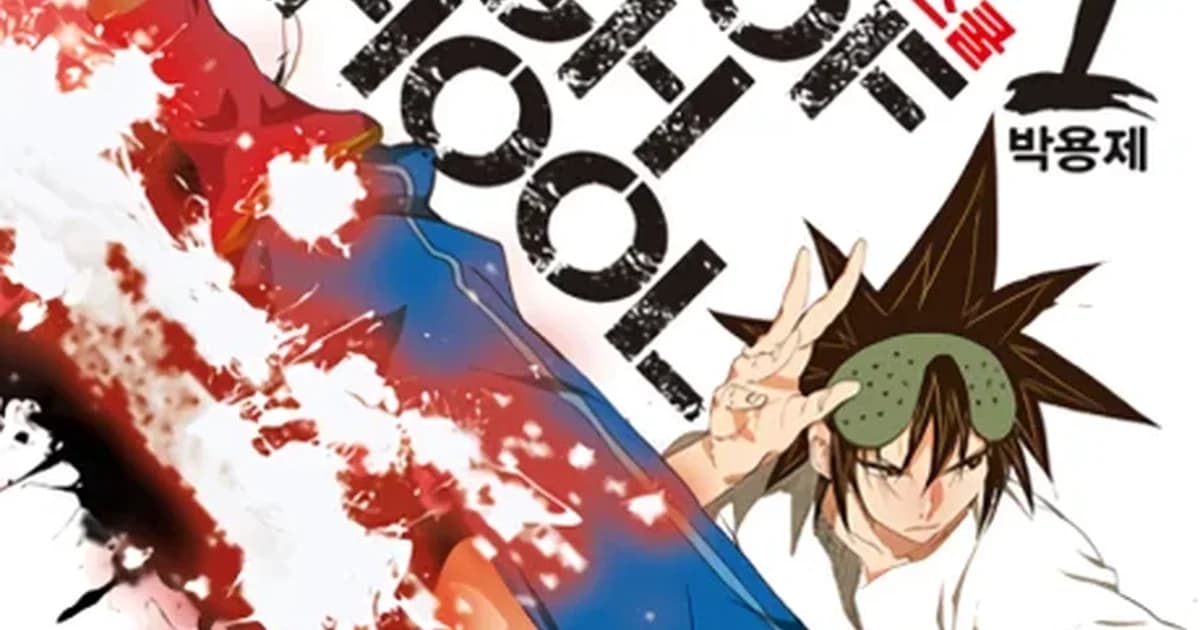
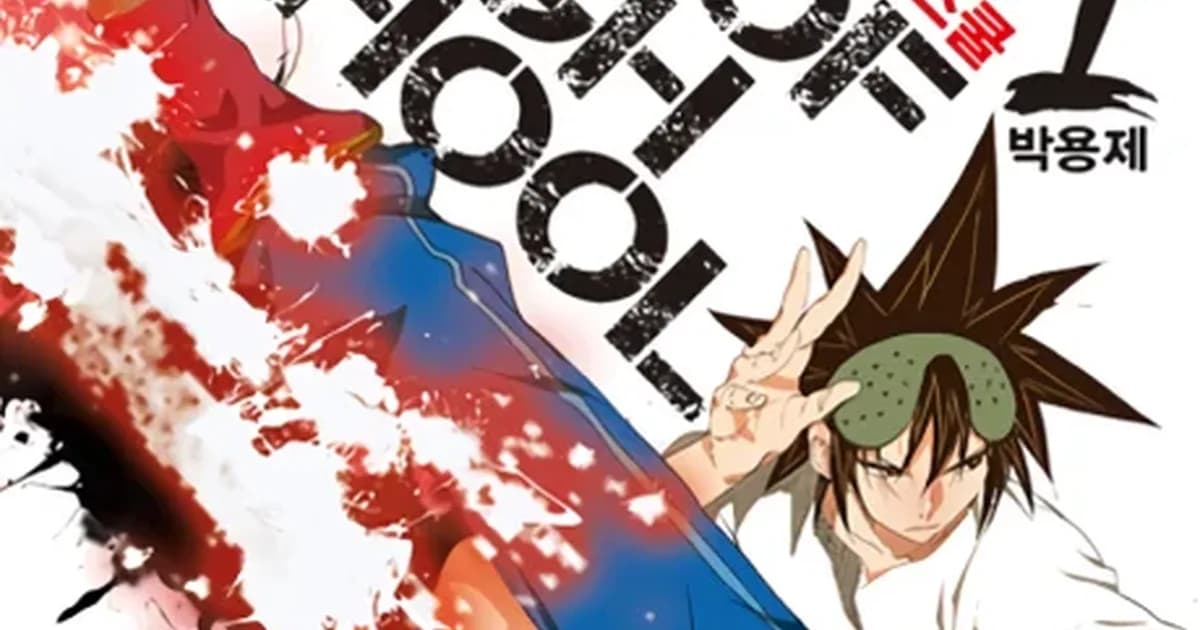
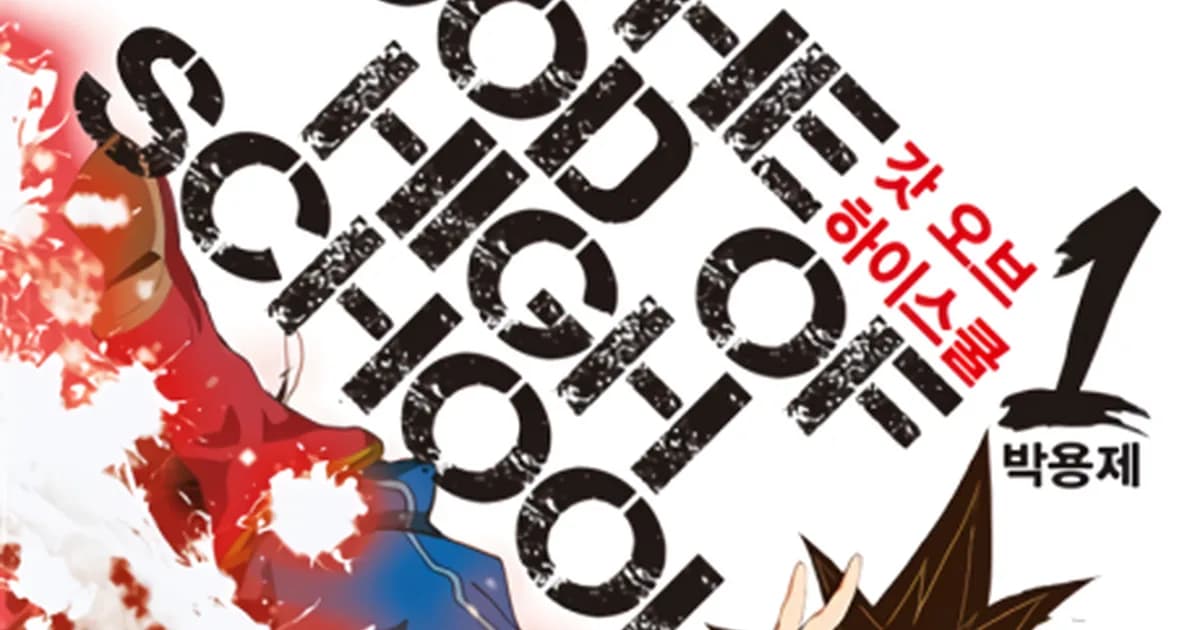
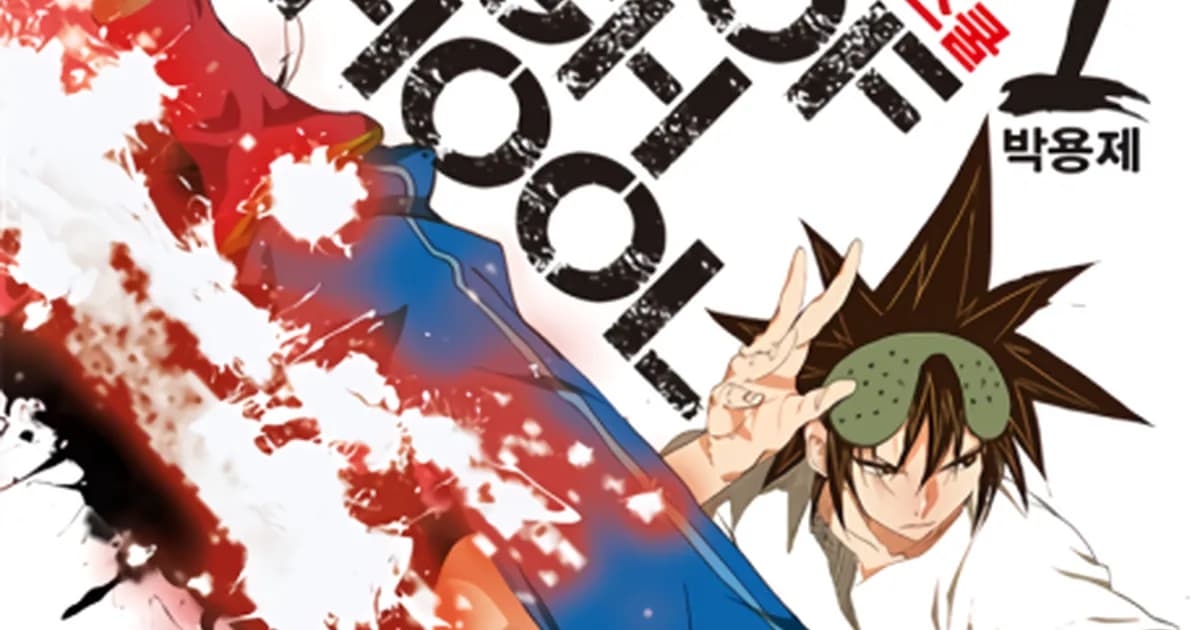
 The God of High School by Park Yongje, a manhwa that started as a clean tournament arc before expanding into mythology.
Art & Story: what Park Yongje does right
This The God of High School review covers both halves of what Park Yongje built, and the art is where the tournament arc and mythology arc differ most visibly. His fight choreography is physically specific in ways that a lot of action manhwa aren't. When Jin Mori throws a kick, the panels show the angle, the point of contact, and the consequence. Not just action lines and impact frames. Different fighters have distinct styles that are visually legible. A taekwondo practitioner looks different from a hapkido practitioner looks different from Yoo Mira's sword technique.
This specificity is part of why the MAPPA anime adaptation works as well as it does. The source material gives animators something to adapt: actual physical logic, not just vibes of power. MAPPA's 2020 production rendered the tournament arc at a quality level that holds up: the fights read as fast and precise rather than frenetic, which is the right call for the material.
The specificity holds through the mythology arc, though at a different scale. When fighters with charyeok (borrowed divine power) operate at full capacity, the scale expands to the point where the physical precision of the early fights isn't available in the same form. This is one of the mythology arc's genuine trade-offs: the fights are visually impressive, but they lose some of the grounded readability that made the tournament arc's fights feel consequential.
For readers who came to The God of High School for Park Yongje's technical fight choreography: the tournament arc is the peak. The mythology arc is different, not lesser, but different in a way that's worth knowing before you start.
The God of High School review: the mythology arc
The mythology arc isn't a surprise if you've been paying attention. Park Yongje planted it in the tournament arc's background from early on. Characters who seem to have simple roles turn out to be connected to the larger conflict in ways that weren't visible when they appeared. The foreshadowing is embedded, not retroactively inserted.
What changes is the scale. The organization behind the tournament is a front. The nature of certain characters' powers is connected to divine conflicts that predate the series' opening. Jin Mori's own origin (why he fights the way he does, what he actually is) becomes the central revelation.
The mythology draws from Korean, Chinese, Buddhist, and other traditions simultaneously. It's dense in the way that mythology-sourced action fiction tends to be. There are entities, hierarchies, and histories to track. Readers who engage with it find it rewarding. Readers who came for the high school tournament bracket find it a different series than they signed up for.
Both responses are legitimate. Any review that covers only the tournament arc is reviewing half the series. The review that treats the mythology arc as a betrayal is applying expectations the series never claimed. It ran for 13 years. It was always building toward something larger.
Charyeok and the power system
Borrowed divine power is introduced before the tournament concludes and becomes the dominant system by the midpoint. Each charyeok is tied to a specific mythological entity. The properties of the borrowed power reflect the entity's nature, which means the power system is doing double work as a mythology primer.
The design here is clever: the martial arts tournament establishes what characters can do with their own abilities, then charyeok introduces what they can access beyond that. The gap between raw ability and divine-power access creates the power scaling conflict that drives the mythology arc. Characters who were tournament-level fighters become vectors for divine-level conflicts.
Where this gets complicated is the abstraction level. In the mythology arc's climactic sequences, the power output is measured in terms that don't have physical analogues. The precision that made the early fights readable becomes harder to maintain at divine scale. This is a structural issue with mythology-sourced power systems in action fiction generally. The God of High School handles it better than average, but it doesn't fully resolve it.
 Nano Machine and GoH share a readership: both prioritize fast pacing and escalating power systems over character depth.
Where The God of High School review lands in the broader picture
The completed-series angle matters here. This review covers a series that ran from 2011 to 2022 and finished. That's more than 11 years of consistent serialization with a conclusion that addresses what the series set up. For context on how rare that is in manhwa: Best Completed Manhwa → covers the full list of series that have actually delivered endings.
The MAPPA anime is worth discussing as a separate artifact. 13 episodes that cover the first 112 chapters is a ratio that shouldn't work. It's too compressed. What MAPPA managed is to identify the emotional core of the tournament arc (the trio's formation, Jin Mori's motivation, the introduction of charyeok) and render those elements at quality while streamlining the bracket structure. The adaptation made intelligent choices about what to prioritize. It's one of the better-handled compressions in shonen tournament anime.
The comparison that comes up often is Tower of God, another long-running WEBTOON action series, that uses a competition as its opening structure before expanding into something larger. They're different enough in tone (GoHS is warmer, Tower of God is colder) and thematic focus that reading one doesn't replace the other, but if the pattern appeals to you, both series reward the investment.
For a broader view of where The God of High School sits in the action manhwa genre: Best Action Manhwa 2026 → covers the full field, including series that have come out in the decade since GoHS started.
Verdict
Advertisement
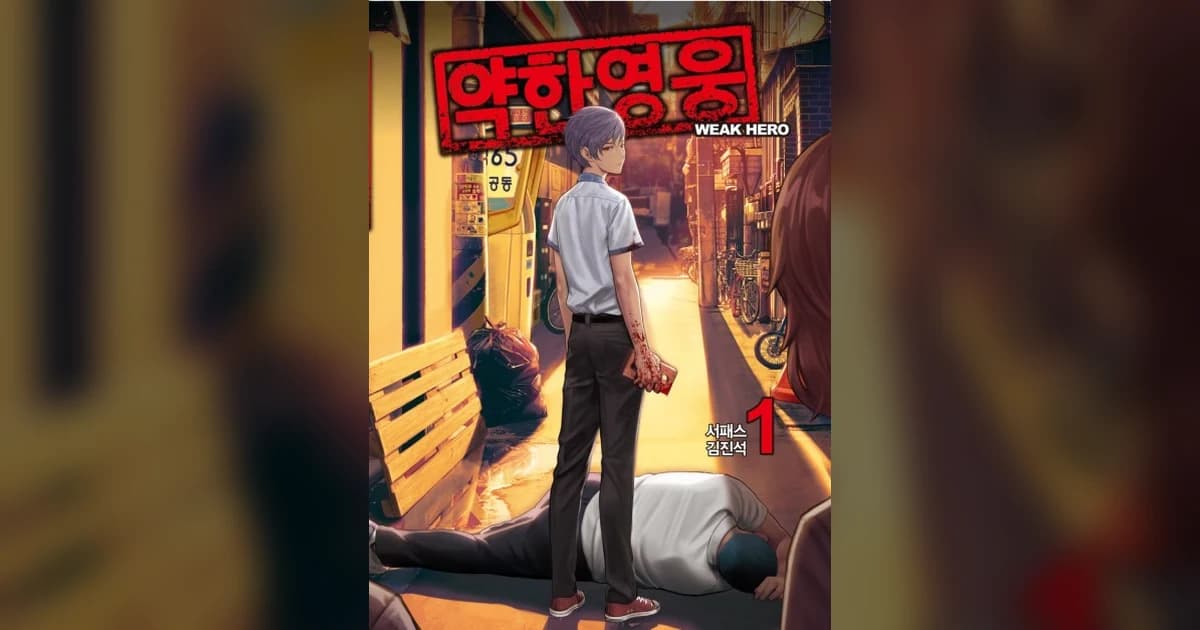
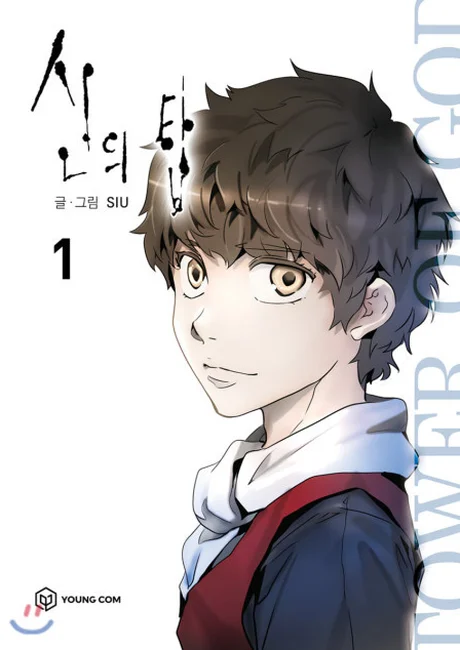 Tower of God shares the tournament-bracket structure and escalating-stakes format of God of High School in a very different setting.
This The God of High School review lands at 8.5. That accounts for a tournament arc that's among the better examples of its format and a mythology arc that commits to something larger with mixed but in the end satisfying results.
The tournament arc: excellent. Jin Mori's motivation is more interesting than it looks, the trio dynamics work, Park Yongje's choreography gives the fights physical logic, and the MAPPA anime demonstrates that the source material can survive a demanding adaptation.
The mythology arc: harder to evaluate in isolation. Dense, ambitious, structurally unusual for its genre. Whether it works depends significantly on whether you invested in the characters across the tournament arc. Jin Mori's arc through the mythology arc is the series' payoff. If you followed him from the tournament, the conclusion has earned weight.
The Good
- 569 chapters completed: the full story is available, the ending exists, no ongoing wait required
- Jin Mori's motivation (he fights because he wants to fight) is more unusual and more durable than it sounds
- Fight choreography in Park Yongje's style is physically specific and readable across the full run
- The MAPPA anime is a genuinely good adaptation of the tournament arc, usable as an entry point
The Cons
- The mythology arc is a significant tonal departure that not every tournament-arc reader follows through
- Power scaling in the later chapters reaches an abstraction level that loses the physical specificity of the early fights
Rating: 8.5 / 10
Frequently Asked Questions
The God of High School ran from 2011 to 2022 on Naver Webtoon; the MAPPA anime adaptation aired in 2020, covering the tournament arc.
Is The God of High School worth reading?
Yes: 569 chapters completed, full ending, free on WEBTOON. The tournament arc alone is worth the first 112 chapters. What follows is a different, larger story that requires the tournament arc's investments to land.
Is The God of High School completed?
Yes. 569 chapters, full ending, all available on WEBTOON at no cost.
Where does the MAPPA anime end in the manhwa?
Chapter 112, approximately. The tournament arc through the early introduction of charyeok. The mythology arc and the ending are manhwa-only.
What is charyeok?
Borrowed divine power. Fighters access a portion of a mythological entity's abilities. Becomes the series' dominant power system after the tournament arc.
Where do I read it?
WEBTOON. Free, complete, official English translation.
Who made it?
Park Yongje. The series ran on Naver Webtoon from 2011 to 2022.
Is the anime worth watching?
Yes, as a sampler or as an adaptation. MAPPA's 13-episode 2020 production is one of the better-handled tournament arc compressions in the genre. It doesn't reach the mythology arc, but it renders the tournament arc at quality.
Related Reading
- The God of High School Reading Guide: Season breakdown, arc map, and where the anime ends in the manhwa.
- Best Manhwa Tournament Arcs: Other series with structured competition formats. GoHS is the lead entry.
- Manhwa Like The God of High School: Recommendations for readers who finished GoHS and want something with the same energy.
- The God of High School Character Guide: Full named roster, AniList-verified: Jin Mori, Han Daewi, Yoo Mira, and the allies and antagonists around them.